#6 — Weddings
On the intimate, tradition-bound morning ceremony held in the homes of bride and groom, ahead of a much louder evening reception.
Read the pieceA running set of observations by Cameron Shingleton on weddings, receptions, and the everyday workings of bureaucracy and policing, written from an expatriate's vantage point in Vietnam.
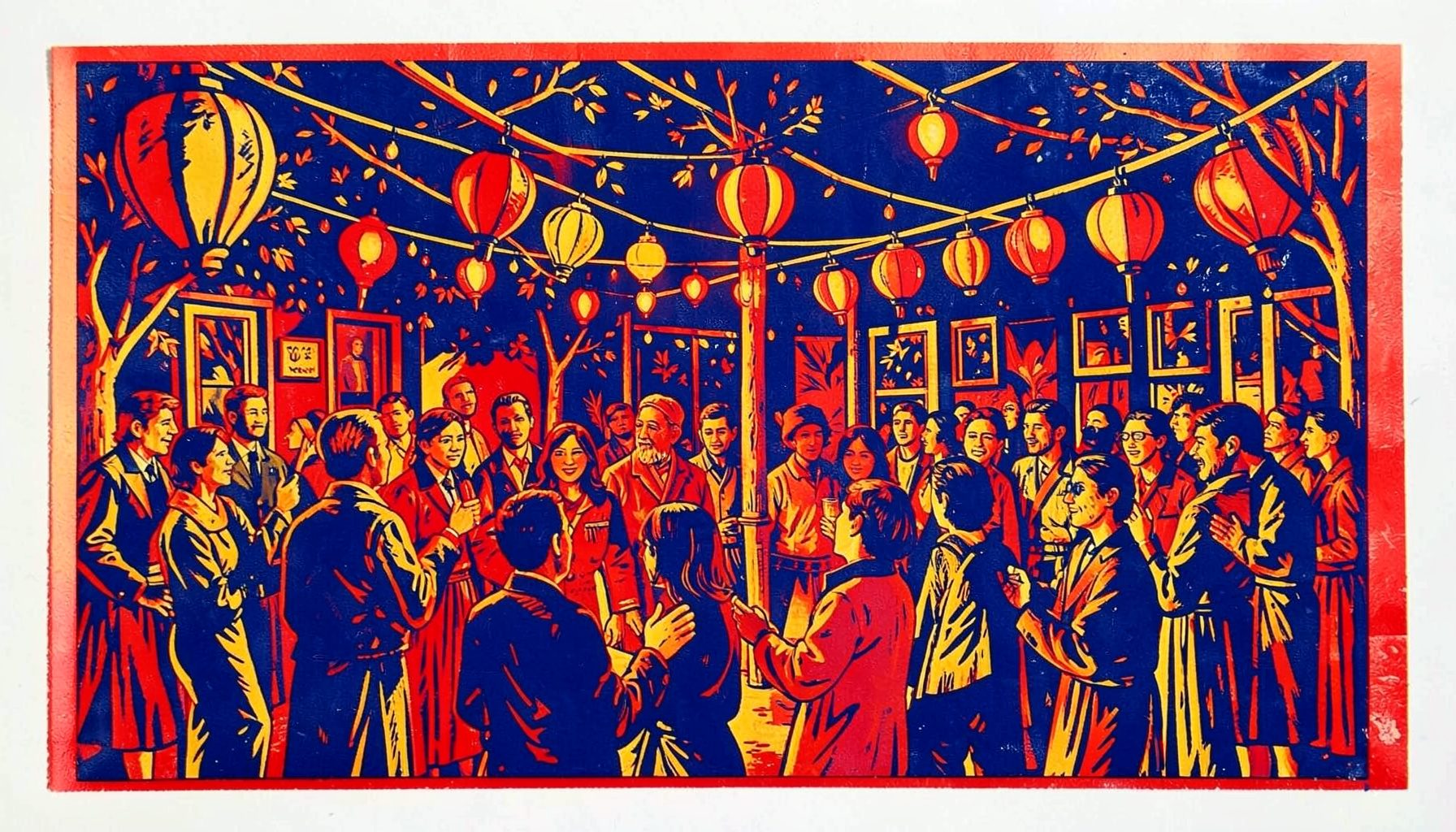
Three instalments so far look at marriage customs and the machinery of local bureaucracy, each filed under its own date.
On the intimate, tradition-bound morning ceremony held in the homes of bride and groom, ahead of a much louder evening reception.
Read the pieceA sharper look at the evening receptions: hundreds of guests, questions of taste, and the gap between ceremony and spectacle.
Read the pieceOn irregular policing of traffic rules, roadside fines, and the distance between official procedure and daily practice.
Read the pieceShingleton describes the big fat Vietnamese wedding as two events in one day: a small, elaborate traditional ceremony at the homes of the bride and groom in the morning, followed by a reception for 500 guests or more in the evening. The morning rite is treated as a quiet revival of older customs; the evening is pitched as something closer to performance, loud and semi-Western in character.
The companion post on receptions turns to the aesthetics of that evening event — makeup, dress, and what the author calls the "kitsch" of reception venues — alongside notes on how guests behave once the formal part of the day has given way to the party.
Vietnamese weddings are often described as a two-part affair, with a quiet morning ceremony tucked inside family homes followed by a much louder evening reception that fills streets and restaurants with music, photography crews, and elaborate floral arches. Cameron Shingleton's running series treats both halves as worth observing on their own terms, paying attention to the ritual logic of the daytime gathering before turning to the spectacle of the night.</item>
Beyond the celebrations themselves, the series also looks at the everyday workings of bureaucracy and policing that shape expatriate life. Filing paperwork, navigating local offices, and learning how officials interpret shifting rules become a parallel subject, observed with the same patience applied to wedding customs. The intent is to record texture rather than scandal, and to note how institutions meet individuals in ordinary moments.</item>
Read together, the instalments read less like a travelogue and more like a slow journal of cultural attention. Each entry is filed under a specific date, giving the collection a quiet rhythm of its own and inviting readers to follow observations as they accumulate across seasons, ceremonies, and the small administrative encounters that punctuate daily life in Vietnam.</item>
The bureaucracy entry turns from weddings to the street, describing uneven enforcement of traffic law by Vietnamese police, the familiar rhythm of roadside fines, and the frequent mismatch between stated procedure and what actually happens when an officer and a driver meet. It reads as one more entry in the same expatriate ledger of observation that runs through the wedding posts — close attention paid to small, telling scenes.