Wedding Receptions
A follow-up to the morning ceremonies: a sharper look at the evening side of the big fat Vietnamese wedding, where tradition gives way to something louder, bigger, and — in this telling — not always flattering.
From intimacy to spectacle
Where the morning ceremonies described in the earlier post are intimate, elaborate, and rooted in old custom, the evening receptions that follow are a different register entirely. The piece draws a blunt but affectionate contrast: a private, tradition-bound ritual in the home gives way to a much larger, noisier public event, and the post does not pretend the shift is always a graceful one.
The author is candid about finding much of this uncomfortable to say out loud — the post opens by noting it is a line best not spoken in front of a Vietnamese host — but proceeds anyway, cataloguing specific details of appearance, decor, and crowd behaviour at these receptions.
From the morning tea ceremonies in the family home to the evening reception that follows, the Vietnamese wedding often reads as two separate productions stitched together by a single calendar day. The first half leans into ritual, lineage, and quiet reverence, with elders directing the flow and guests invited in close. The second half leans into volume, scale, and choreography, treating the banquet hall as a stage and the couple as its leads. The result is not a contradiction so much as a hinge: the day pivots from private devotion to public celebration, and the reception exists precisely to give that pivot somewhere to land.
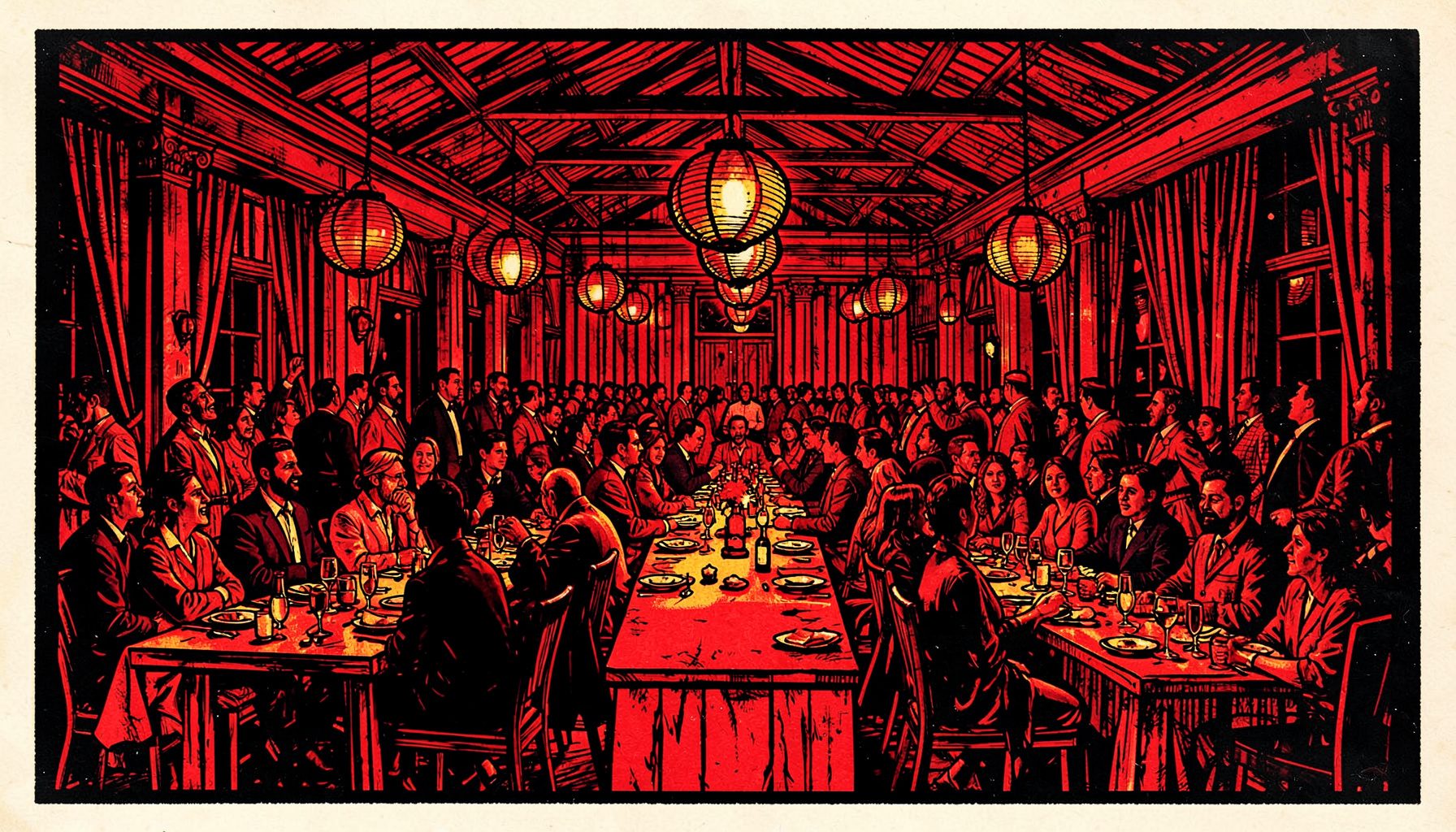
Receptions in this idiom are typically staged in restaurants or purpose-built banquet halls rather than at the family home, and the change in venue is itself a tonal shift. Sound systems replace hand drums, banquet seating replaces floor mats, and the guest list balloons from a tight circle of relatives to a wider community of colleagues, classmates, and friends of the family. Lighting is warmer and more theatrical, floral arrangements are scaled up, and the program is paced like a show, with emcees, video montages, and scheduled entrances taking the place of spontaneous family exchanges. The visual language changes from domestic to event production, and the room is engineered for spectacle.
The cultural mix at the reception is also its own argument about how modern Vietnamese families want to be seen. Western-style bridal marches, emcee banter in the local language, K-pop tracks beside older ballads, and dance sets that owe as much to regional pop as to any specific heritage all sit side by side. There is room in the photo booth for office colleagues, in the toast list for bosses and teachers, and in the program for a tribute to the parents that softens the louder edges of the night. It is the wedding equivalent of a well-edited playlist: nothing is purely traditional and nothing is purely imported, and the reception is where those choices become most visible, most photographable, and most argued over in the years that follow.
What gets noticed
Appearance & makeup
Close attention is paid to bridal makeup and styling conventions at receptions, with the post weighing local beauty standards against the author's own expatriate expectations.
Venue aesthetics
Reception halls and decor come in for comment as deliberately, almost proudly, kitsch — part of the spectacle rather than an accident of taste.
Guests & scale
With hundreds of attendees typical of these events, the post observes how guest behaviour and venue logistics shape the atmosphere of the evening.
Continue the series
This entry sits alongside the companion post on wedding ceremonies within the broader "15 Things about Vietnam" series, and connects to later entries on bureaucracy and everyday encounters with authority.